Deal Hotel Book

Saturday, February 22, 2014

2014 Winter Olympics : Short History of Sochi


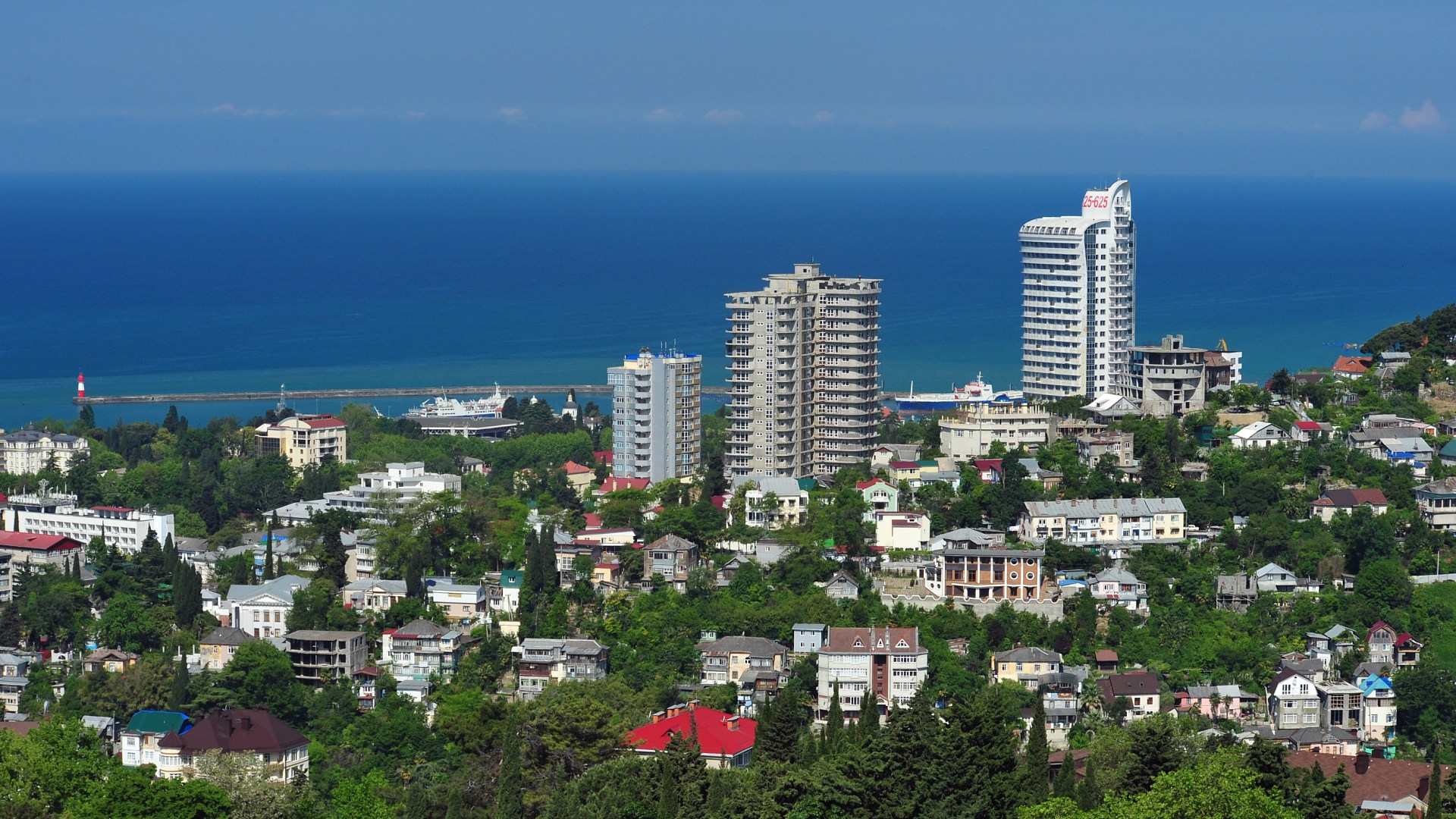
The town Sochi stretches for 145 km along the Black sea coast of the Caucasus in Krasnodar region. The area of the town is 3505 square km. The population is about 400 thousand people. The town consists of four administrative districts: Adler, Khosta, Central, Lazarevskoe. 

The territory of Sochi started being opened up 400-350 thousand years ago in the epoch of early paleolithic, and played an appreciable role in antique and medieval history. A lot of archaeological relics have been discovered and partially examined here: caves, open sites, settlements of prehistorical people, dolmens, ruins of fortresses, temples and burial grounds, burial mounds.

Starting with the second half of the XVI century the Caucasus turned into the arena of Russia's fight with Turkey and Percia. This fight ended up in 1829 with the signing of Andriapol peaceful treatment, ac­cording to which , the Black sea coast from the mouth of the Kuban river till the fort of St. Ni kiolai (to the south of town Poti) became the territory of Russia. During the Caucasian war in the 30-s of the XIX century, the Black sea coast line, consisting of the shore forts for guarding the coast, was formed. The following forts.- of St. Spirit (Adler), Aleksandria (Sochi), Lazarev's fort (Lazarevskoe), Golovinsky (Golovinka) and others, - were built by the Russian troops on the territory of Sochi. The ruins of the forts walls were preserved, and now they are the historical monuments.

On April, 21 1838 the military landed troops laid the fort Aleksandria in honor of the Empress's birthday on the height, at the mouth of the Sochi river. That place became the first Russian settlement, located in the center of modern Sochi.

The town got its present name "Sochi" in 1896 after the name of the river and of the place of the ubykhs tribal nation, who had inhabited this territory till 1864. The examining and exploration of the Caucasus Black sea coast curative factors started after the end of the Caucasian war in 1864. The process of the land division was passing very quickly at that period on the Black sea coast. The government was not able to solve the problem of the industrial development of the region, and it was possible to cope with it on the basis of the private capital only. Russian bourgeoisie, in its turn, felt benefit from this region. New opportunities of investing the capital and of increasing the profit appeared here.

A villa "Vera" was built in N.N.Mamontov's estate in 1872. This building can be considered the first construction of a dacha type on the territory of Big So­ chi . Then some decline in dacha building was observed. The activity of the special commission on exploring the Black sea coast from Novorossiissk to Sukhumi, which had started its work in 1898, was an important page in the history of the development of the resort Sochi. The professors A..I.Voeikov, F.I.Pasternatsky and a mountain engineer A.V.Sergeev were included into the commission. The report of the commission was presented at the I All-Russian congress on climatology, hydrology and balneology in Petersburg in 1898. The reports said, that due to the natural richness of the Black sea coast, the foundation of the balneological and climatic resorts was quite possible. However, considerable sums, the governmental support and the co-action of the people, experienced in this matter, were demanded.

The rich land of the Black sea coast attracted manufacturers and business owners more and more at the end of the XIX- beginning of the XX centuries. According to the Resolution of May, 23 1896 the Black sea district, which had been included into the Kuban region, was separated as an independent Black sea province. It was the smallest of all Russia's provinces (6455 square versts). Simultaneously, the trusteeship of Sochi area was reformed into the district. The borders of Sochi district stretched from the Dederukai river (nowadays- Lazarevsky district) till Sukhumisection (Gagra).

The borders have been expanded at the cost of Sukhumi district since 1901. Since that time Sochi district occupied the territory between the sea and the Main Caucasian Ridge from the Shakhee river in the north till the Bzyb river in the south, including Gagra. By the same resolution (of May, 23 1896) Dakhovsky settlement was re named into settlement Sochi after the name of the tribal community of the ubykhs "so- atshee", who had inhabited this territory till 1864. Since May/I 1898 settlement Sochi was in­ cluded into the list of the settlements with the simplified public governing, i.e. it had the status of an urban type settlement . The administration consisted of a headman, his assistants and of 12 plenipotentiaries, elected by the citizens.

Sochi got the status of a town only in July, 31 1917 after including the suburbs of Vereshchaginskaya, Khludovs- kaya, Katkovo-Leontievskaya dachas, as well as the private people estates-, the Kostarevs's, the Tolokonnikovys's, the Khudekovs's and others, into the urban area of the settlement. There were big private estates of the earl S.D.Sheremetiev, S.I.Kovalevskaya, of the Great prince Mikhail, the tsar's estate "Dagomys", etc.

An architectural aspect with peculiarities and originality, typical only for the seaside resort towns and distinguishing them from other provincial regions, was formed in Sochi at the end of the XlX-the beginning of the XX centuries.


The main principle of a town-constructing approach, when building Sochi, was aimed at the creating a resort as a gar­den-town. Architecture had the features of pavillion-like buildings, typical for the park ensembles, where the main architects' goal was achieving harmony of the architecture with natural landscape. The parks comprised the particular pride of Sochi health-resort town.

The architecture of the buildings was accomplished in strict harmony with the environment and had specific features of its time. The buildings and constructions, erected at that period, have been attracting the attention of the inhabitants and of the guests since then.

Sochi Fine Arts Museum (the former building of the Plenipotentiary Central Elective Committee (CEC) of the USSR in Sochi-Matsesta resort), the Zimny (Winter) theater, Ordzhonikidze sanatorium - are the monuments of architecture and town building of the republican grade.

Natural setting, environment and climatic conditions of Sochi's location are really unique. In fact, a health-resort Sochi in a body is a part of the State Natural National Park, and a part of Sochi has been included in structure of the Caucasian biospheric reserve not without reason.

90% of territory of Sochi are mountains and foothills of the Western Caucasus covered by boundless deciduous forests. Because of a soft climate, plants from all parts of globe are collected here.

The altitude of highest mountains is more than 3000 m above sea level. Only here you've got an opportunity for simultaneous sun-bathing, sea baths taking, and for mountain skiing.

A land along-shore the Big Sochi, from settlement Magri in northwest, up to the river Psou on border with Abkhazia squeezes through gaps between the Black Sea and piedmonts of the Western Caucasus.

Warm coastal sea cur­ rents, glen winds and breezes render softening influence on a climate, creating surplus of a moisture under high summer temperature.

The network of mountain ridges protects coast from severe dry continental winds and creates a unique subtropical micro-climate in this territory.


Recommended hotels in Sochi, Russia :
Nairi Hotel

Planning a trip to Sochi, Russia? Visit Hotels-Seeker.com and Booking.com to get the best accommodation prices in real time, straight from the 100 best reservation websites in the world!

Monday, February 17, 2014

England for the Novice Adventurer


England, which is also known as the land where sun never sets is an awesome place for the people to spend their vacation. Different world famous attractions can be seen in England for the people to enjoy. They can help an individual to get an unforgettable holiday. London is the capital city of England and most of the tourist attractions of England are centered on London. The Tower of London can be defined as one such attraction. The Tower of London was built in the 11th century and has played a very prominent role in English history. It is the original royal fortress and is located on the north bank of River Thames. It is one of London's best sites depicting the history and glory of England. Throughout the centuries, the tower has been a palace, prison, place of torture and place for crown jewels. Millions of people visit the tower every year and is one of world's heritage sites in the UNESCO list since 1988.

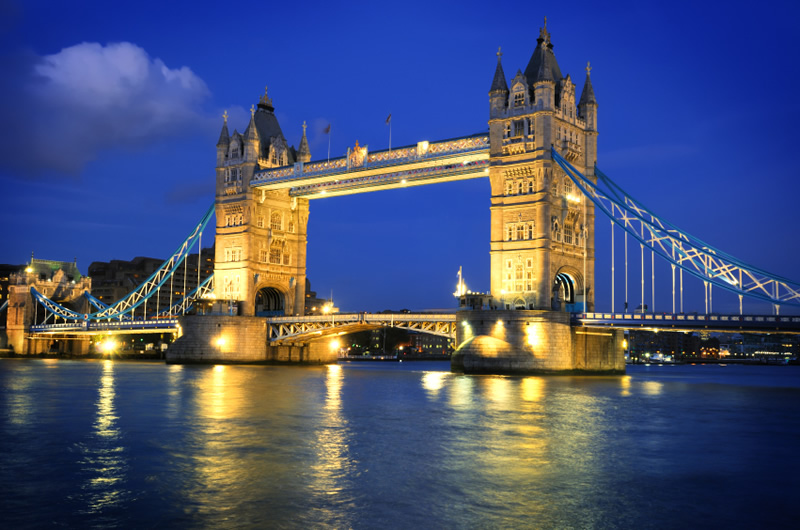
Tower Bridge is a bascule and suspension bridge over The Thames and was opened in 1894. It is an iconic part of the London skyline and the glinting blue upper walkways offer special views of building that line the river, the city center to the west and the Docklands to the east. The Tower Bridge Exhibition attracts people to the bridge, where the construction is explained and visitors are allowed to look into Victorian engine rooms and know about the power that raised the bascules of the bridge. Trafalgar Square is London's famous public square and tourist attraction in central London that was created to commemorate the Battle of Trafalgar. The National Gallery in the north, St Martin-in-the-Fields Church in the east, the Strand to the south of the Church and many prominent statues make the square a unique attraction in London.

London Dungeon is one of London's famous attractions recreating glory and macabre historical events in a gallows humor style. With live actors, special effects and rides, this site appeals younger audience largely. It was opened in 1974 and is operated by Merlin Entertainments. It's highly thrilling to face the worst nightmares, take rides like extremis and traitor and have several unique experiences. Shakespeare's Globe is located on the south bank of the River Thames. It's a commemoration to the famous English poet and dramatist William Shakespeare. The current theatre is the replica of the original Theatre built in the 16th century, which was burnt to ground in the 17th century. It is a commemoration to William Shakespeare one of world's best English poets and dramatists.

England is a crowded country, so the tourists who are planning to visit the country are advised to book hotels before they land. Hotels-seeker.com will help you to book the hotels in a convenient way. All you have to do is to visit Hotels-seeker and search for the hotels in your destination town. Then you will be directed to the search results page, which will contain a list of all the available hotels in that particular city. All the results are taken on a real time basis from leading hotel booking websites like Travelocity and Venere. They have a good collection of hotels in their databases and they include most of the hotels, motels, inns and hostels in England. Moreover, you can access the video on context feature and watch video documentaries about England while searching for a hotel. There is something for everyone who is planning to visit another country in Hotels-Seeker.com, so thousands of people visit there to make their journey a memorable one.

The best hotel accommodations in the popular cities in England :
Birmingham

Planning a trip to England? Visit Hotels-Seeker.com and Booking.com to get the best accommodation prices in real time, straight from the 100 best reservation websites in the world!

Saturday, February 8, 2014

Get the Best Accommodation Deals in Thailand with Hotels-Seeker.com


Thailand is renown throughout the world for being a popular travel destination and a backpacker's paradise, but the pure white beaches, the crystal blue sea, the beautiful historical and cultural locations and the busy inner cities can lend themselves to the hearts of any willing tourist. Whether you're looking for thrilling sites, relaxing tropical vistas or the sprawling metropolis of Bangkok, there is something in Thailand for everyone. Thailand is blessed with a tropical climate, leaving it oscillating between cool temperatures and sweltering heat, aside from a brief rainy season around September time. Beach goers will want to visit around March to June time, whilst backpackers and those visiting temples wanting to avoid the worst of the heat by heading out between November and February.

Most people spend a few days in the Thai capital, Bangkok but many find the pollution, traffic congestion and chaotic street life extremely wearing. There's plenty to take you off the street, however, including the glittering Grand Palace compound and its beautiful gigantic Reclining Buddha; the comprehensively stocked National Museum; the massive Chatuchak weekend market; with over eight thousand different nightlife that suns the full range from cutting-edge clubs to depressing strip joints. Thailand's beaches are among the world's best. You'll find the most developed and expensive resorts and some of the finest sands, on the islands of Ko Samui and Phuket, while backpakers tend to head for the more budget oriented Ko Pha Ngan, Ko Tao, Ko Lanta and Ko Mook. Krabi's Railay beaches are nothing short of stunning, Ko Samet makes and easy and economical break from Bangkok and Ko Chang is handy for travelers heading in and out of Cambodia.

You can even visit the ruined former capitals of Sukhothai and Ayutthaya during your stay in Thailand. Dating from the thirteen century, Sukhothai is a beautiful example og thoughtful city planning enlivened by lakes and elegant statues of the Buddha. The 300-year-old temples and palaces of Ayutthaya display a refined mix of Hindu and Buddhist sculpture and are fun to explore by bicycle. Both sets of ruins are now conserved as historical parks. There are plenty of sobering World War II sights in the town, as well as reasonable range of trekking, rafting and cycle options that make the most or the fine river scenery, plus some appealing rafthouse accommodation too. Since Thailand is a major tourist attraction in the world, you can find a wide range of services as well. The Thai massages are one such popular service offered to the tourists by native people. If you can find cheap accommodation facilities in Thailand, you can experience all these things with less hassle. If you are looking for accommodation facilities in Thailand, Hotels-Seeker.com is the website that you need to visit. With the help of Hotels-Seeker, you can find a perfect hotel in Thailand within few minutes.

Plenty of reasons are available for the tourists to visit this website than going for hotel booking websites like Octapustravel.com, Otel.com and Agoda.com. They are made only for hotel booking purposes, but Hotels-seeker is made specifically for hotel comparison. The available features will help you to compare the available hotels and find the perfect one for you. Looking for hotels has never been so easy like this. When you find the perfect hotel, you can go ahead and find the contact details to book the hotel. There is an interesting video documentary service on the website which allows you to see videos of attractions around the hotel you select. Therefore visit Hotels-Seeker right now and spend an unforgettable vacation in Thailand.

The best hotel accommodations in the popular cities in Thailand :

Planning a trip to Thailand? Visit Hotels-Seeker.com and get the best accommodation prices in real time, straight from the 100 best reservation websites in the world!

Sunday, October 13, 2013

The Best Attractions in Athens, Greece


Athens is the capital and largest city of Greece. Athens dominates the Attica region and is one of the world's oldest cities, with its recorded history spanning around 3,400 years. It features some of the greatest tourist attractions in the world, including ancient temples and fabulous museums. In this article I will present some of them.

Cape Sounion and the Temple of Poseidon

A great afternoon trip from Athens, this is one of those spots that is as much a favorite with the locals as it is with the tourists. It's a favorite sunset-viewing spot for everyone, and will give you a classically Greek moment against the ruined monument along with a terrific sea view. While it is possible to visit Sounion by public bus from Athens, most visitors prefer to drive or to take an organized tour. You can book one directly ahead of your trip, through your hotel or by visiting any travel agency in Athens.

Piraeus

Can't get away to the Greek islands? Or already missing the one you just left? Slip away to Piraeus, easily reachable by the Metro, and have dinner at one of the pricy but charming seaside taverns of Microlimano. Piraeus, the port city of Athens, is not quite a Greek island, but it will do. Allow yourself some extra time and stop by the excellent Piraeus Archaeological Museum or the equally-fascinating Nautical Museum first. You can also take an Open-Topped Bus Tour (find prices) between both Athens and Piraeus, making it an easy and interesting way to get back and forth between the two cities.

The Agora

This is one attraction that gets skipped, partly because it is readily confused with the Roman Agora and while you'd be falling over yourself to visit a Roman agora in Italy, well, this is Greece. (For the same reason, the very nice Egyptian antiquities collection at the National Archaeological Museum gets overlooked, too - except by Greeks.) But this spot offers an easy hour's wandering, with the almost-perfect temple of Hephaestus, a rebuilt colonnade housing the museum, and many minor monuments. A multiple-site combo ticket makes it a particularly good bargain to combine a visit here with the Acropolis and other nearby sites.

Lycabettus Hill

Want to rise above it all, especially on a hot day when the thought of the stony outcrop of the Acropolis seems too warm and bright? Take the easy way up to the wooded top of Lycabettus Hill by using the tubular funicular rail car and escape the heat and, if you're lucky, some of the tourist crowds.

Tomb of the Unknown Soldier

The war memorial known as the Tomb of the Unknown Soldier is guarded by the city's famous statuesque evzones, the presidential guards whose uniform of short kilts and pom-pom shoes is based on the attire worn by the klephts (the mountain fighters of the War of Independence). The changing of the guard takes place every hour, while every Sunday at 11:00 the evzones perform an extended changing of the guard ceremony in full ceremonial dress, accompanied by a military band.


Recommended hotels in Athens, Greece by Booking.com

National Art Gallery

Greece’s premiere art gallery showcases its permanent collection of modern Greek art and hosts major international exhibitions. Exploring the country’s art movements, the exhibits include post-Byzantine art and works from the Eptanesian School of secular painters; portraits and historical scenes from the War of Independence and the early years of the Greek state; and leading 20th-century painters. Prize exhibits include three masterpieces by El Greco.

Temple of Olympian Zeus

The colossal Temple of Olympian Zeus (or Olympeion) is the largest in Greece and took more than 700 years to build. Fifteen of the original 104 massive (17m-high) Corinthian columns survive, along with the one that toppled over in a gale in 1852. Peisistratos began building the temple in the 6th century BC on the western bank of the Ilissos River, at the site of a smaller temple (590–560 BC) dedicated to the cult of Olympian Zeus (its foundations can be seen on the site), but construction stalled due to lack of funds. A succession of leaders tried to finish the job, making adjustments along the way, which explains inconsistencies in the temple. Hadrian finally finished the task in AD 131. The temple housed a giant gold and ivory statue of Zeus and one of Hadrian.

Panathenaic Stadium

The first modern Olympic Games, in 1896, were held in the imposing Panathenaic (or Panathenian) marble stadium, on the site of the original 4th-century BC stadium built for Panathenaic athletic contests. The Romans held gladiatorial contests where thousands of wild animals were slaughtered and it was later rebuilt by Herodes Atticus for the Panathenaic Festival in AD 144. The stadium was completely restored for the 1896 Olympics and for the 2004 Games. The stadium, which is known as the Kalimarmaron (meaning ‘beautiful marble’), made a stunning backdrop to the archery competition and the marathon finish. Public access is limited, but it is a site to behold.

Planning a trip to Athens? Visit Hotels-Seeker.com and Booking.com to get the best accommodation prices in real time, straight from the 100 best reservation websites in the world!

Thursday, October 10, 2013

The Amazing History of Istanbul, Turkey


Istanbul is the largest city in Turkey, constituting the country's economic, cultural, and historical heart. In this article you can learn about the city's amazing mythology and history from its' foundation until today.

The Mythology

The legend of the foundation of Istanbul is derived from classical mythology: Zeus fell in love with Io, the daughter of Inachus, King of the City of Argos and God of the River of Argos. The King of the Gods temporarily transformed the girl into a heifer in order to protect her from the wrath of his wife, Hera, Queen of the Gods. In her wanderings Io crossed the Bosphorus, giving the strait its name (''boos-foros'',''cow-ford''). After reassuming her original form, she gave birth to a girl, Keroessa. Later, Keroessa bore the son of Poseidon, sovereign deity of all waters from the Pillars of Hercules to the Hellespont. Keroessa's son, Byzas the Magerian, in time became the founder of Byzantium and named the Golden Horn (Chrysokeras) after his mother.

Istanbul's Foundation

According to the archeological discoveries, Asian side of Istanbul was probably inhabited by people as early as 3000 BC. Eventually, in the 7th century BC, Greek colonists led by Byzas established the colony of Byzantium on the European side at the peninsula, today known as the Seraglio Point, where the Bosphorus and the Golden Horn meet and flow into the Marmara (667 B.C.). Another legend has it that, Byzas chose the spot after consulting Oracle of Apollo at Delphi who told him to settle across from the "land of the blind ones." Indeed, Byzas concluded, earlier settlers must have been deprived of their sight to have overlooked this superb location at the mouth of the Bosphorus strait. This proved an auspicious decision by Byzas, as history has shown Istanbul's location important far beyond what these early Greek settlers might possibly have conceived.

In the early 100's BC, it became part of the Roman Empire and in 306 AD, Emperor Constantine the Great made Byzantium capital of the entire Roman Empire. From that point on, the city was known as Constantinople.

The mid 400's AD was a time of enormous upheaval in the empire. Barbarians conquered the western Roman Empire while the Eastern, also called the Byzantine Empire, kept Constantinople as its capital. In 532 during the reign of Justinian I, antigovernment riots destroyed the city. It was rebuilt, and outstanding structures such as Hagia Sophia stand as monuments to the heights Byzantine culture reached.

The attribute that made the city so desirable, its incomparable location for trade and transport between three continents, was also its nemesis. For the next several hundred years Persians, Arabs, nomadic peoples, and members of the Fourth Crusade (who for a time governed the city) attacked Constantinople.

 Recommended hotels in Istanbul, Turkey by Booking.com

In the Ottoman Era

Finally, weakened by almost constant battle, the Ottoman Turks successfully conquered Constantinople in 1453. Renamed Istanbul, it became the third and last capital of the Ottoman Empire. It was the nerve center for military campaigns that were to enlarge the Ottoman Empire dramatically. By the mid 1500's, Istanbul, with a population of almost half a million, was a major cultural, political, and commercial center. Ottoman rule continued until it was defeated in world war one and Istanbul was occupied by the allies.

In the year 1453, the army of Ottoman Sultan Mehmet II (Sultan Mehmet the Conqueror) conquered the city. The seventh and final Ottoman siege of Istanbul was carried out under the command of Mehmet II, the Ottoman Sultan historically known as Mehmet the Conqueror. Mehmet the Conqueror had the Rumeli Fortress ( Rumeli Hisari ) constructed on the European shore of the Bosphorus, directly across from the Anatolia Fortress, thus cutting off all Black Sea traffic in and out of the city. Nevertheless, Cardinal Isidore of Kiev, the Pope's envoy, arrived in Istanbul to seal the union between the Catholic and Orthodox Churches. This union, proclaimed by Constantinus in Hagia Sophia ( the Church of Holy Wisdom ), caused unrest among the devoutly Orthodox Byzantines, and popular opinion swayed strongly against the Emperor. Meanwhile, Mehmet the Conqueror moved his galleons over the land by means of specially constructed sleds and pulleys and the Byzantines woke up one morning to find the Golden Horn invaded by the Ottoman navy. Enormous shell-holes were torn in the ramparts through which the Sultan's soldiers entered the city and, by means of a temporary bridge built across the Golden Horn, they crossed into the heart of Genoese Galata. The entire battle took place between April 6 and May 29, and on this final day, Istanbul, once the capital of the Byzantine Empire, fell to the Turks. Mehmet the Conqueror, Sultan of the Ottoman Empire, was 21 years old and the city was 2120 years old (1453 A.D.) first of all, the oldest buildings and the formerly magnificent but dilapidated city walls were restored. On the ruins of the Byzantine foundations, the buildings of the basic institutions of the Ottomans were built. The great water system with its huge cisterns was repaired and returned to use. The city had developed its Ottoman identity, resembling its present character.

With the addition of the buildings of the famous architect Sinan, the city had again become the capital of a great empire. Together with the remaining population after the conquest, people coming from all over the empire, from all kinds of ethnic origins and religions, created a colorful mixture. In Istanbul - the new Constantinople - the cultural variety brought in by the immigrants enriched the cultural texture of the city. The bedesten where the merchants were settled and the many han where the craftsmen were to be found turned into centers that enabled this harbor city to develop trade with the outside world. Huge markets were built, further supporting trade. During the period of the height of Ottoman imperial power, the city was covered all over with tulips, in what is known as the" Tulip Era." In the 19th century, efforts modernization were undertaken. Istanbul entered the 20th century worn out and burdened by its history as the capital city of three great empires. At that time, the Ottomans were just about to end their imperial period of 630 years.

In the Modern Era

After World War I, resistance movements became active during the Allied occupation of Istanbul, an occupation that lasted for nearly five years. When the resistance movement in Anatolia finally gained success, the last of the foreign soldiers left the city on October 5, 1923. On October 6, the Turkish army entered the city heralding the message of a new government led by Mustafa Kemal Ataturk, the leader of the Turkish independence war, and his colleagues had made a decision in the new National Assembly that Istanbul would turn over its function as capital of the new nation to Ankara. Under republican rule, much new construction activity took place in Istanbul, starting with the building of family houses in the 1930s. In 1950s, more than 7300 buildings were torn down and the road system reorganized. This caused historic changes in the fabric of the city.

Famous Istanbul historian Jak Deleon writes about Istanbul in his book named 'The Bosphorus: A Historical Guide': ''From Byzantium to Constantinople and from then to Istanbul, this fabled city, divided by the Bosphorus strait, lies in both Europe and Asia. The European side is separated into two by a scimitar-shaped gulf called the Golden Horn: the old town sprawls along one side, with its Byzantine ramparts and Ottoman palaces facing the Marmara Sea, the Propontis of antiquity; on the other side, one can see the ancient Genoese port of Galata and the more modern quarters beyond, with the legendary Bosphorus winding its way up to the Black Sea, the Pontus Euxinus of antiquity. It is this garland of waters which makes Istanbul, whose seven hills are crowned with imperial monuments, a unique city.

Planning a trip to Istanbul? Visit Hotels-Seeker.com and Booking.com to get the best accommodation prices in real time, straight from the 100 best reservation websites in the world!

Wednesday, May 8, 2013

Canada's Best Natural Attractions


Canada's natural attractions are absolutely extraordinary! Now, as it gets a little warmer in Canada, it's a great time to visit it's wonderful natural attractions. We brought you five of the best ones, here they are:

Bay of Fundy, the Maritimes

The Bay of Fundy extends from the northern coast of Maine into Canada between New Brunswick and Nova Scotia. Twice daily, the Bay fills and empties its 100 billion tons of water, creating the highest tides in the world - in some areas of the bay; tides reach more than 16 meters. The energy created by the force of these tides drudges up nutrients from the ocean floor that attract an interesting and wide range of animal life to the bay. The effect of the tides has also carved out a dramatic surrounding landscape of steep cliffs and sea stacks. In addition, water has worn away the shore's red sandstone and volcanic rock to reveal a plethora of fossils and signs of life from millions of years ago.

Niagara Falls, Ontario

With more than 168,000 cubic meters of water falling over its brink per minute, Niagara Falls is the most powerful waterfall in North America and maybe the most famous in the world. The town of Niagara Falls is best known as a honeymoon spot, attracting millions of romancing couples every year; it's akin to a smaller, shabbier Las Vegas in that it has a reputation as an adult playground. Nevertheless, Niagara Falls has become more sophisticated, seeing the launch of a large, modern casino resort in 2004, which draws big name acts. The casino's success has had a trickle-down effect, with finer dining and other hotels opening up.

Northern Lights

The Northern Lights is a phenomenon seen in northern skies where solar particles collide with atmospheric gases and create a light show in the sky. Depending on how north the locations, the color of these lights are green, white, red, blue and/or violet. The aurora oval - the area where the northern lights occur most often and with greatest intensity - covers a huge part of Canada.

Rocky Mountains, British Columbia

The Canadian portion of this magnificent North American mountain range stretches along the British Columbia border and includes five national parks that attract millions of visitors each year for hiking, skiing, biking, fishing or just relaxing. Kananaskis Country is another popular year-round Rocky Mountain destination and featured prominently in the film Brokeback Mountain. Banff, Jasper, Lake Louise, Fernie, Kimberley, Waterton, Canmore, Invermere, Revelstoke, Golden, Cranbrook, Valemount and Kananaskis, of course, are all alpine towns that boast world-class skiing.

Dinosaur Provincial Park, Alberta

Two hours east of Calgary is one of Canada's most unique National Parks where dinosaur history meets stunning scenery. Pinnacles, serpentine spires and other sculptural land formations jut up from these Alberta badlands, creating an eerie environment unlike any other in Canada. This awesome landscape is home to some of the most extensive dinosaur fossil fields in the world boasting the remnants of more than 35 species of dinosaur that lived here 75 million years ago when the area was a lush, sub-tropical forest. Visitors can choose from bus tours, hikes, expeditions and other educational programs. In 1979, Dinosaur Provincial Park was designated a United Nations World Heritage Site.

Planning a trip to Canada? Visit Hotels-Seeker.com and get the best accommodation prices in real time, straight from the 100 best reservation websites in the world!


Friday, April 19, 2013

Hotels-Seeker.com Introduces New Features and Services


The review and accommodation prices comparison website, Hotels-Seeker.com scans the world's leading websites on-line and gets the cheapest prices in real time - to give users the proper tools necessary for making correct decisions regarding the selection of accommodations, all their types and wherever they are.

Recently, the website launched three new services to improve the user experience and assist in making informed decisions:

1. "Give and Take" Market Service for Hotel Booking - buying and selling of available hotel orders that cannot be refunded.

There's a new, revolutionary tool in the world of tourism -- Cancelon. Every day there are about 200,000 available rooms due to unexpected cancellations, and as a result the customers lose about 10 billion dollars a year, since their money can't be returned. This service allows users to buy and sell canceled reservations that can't be refunded, and save hundreds to thousands of dollars.

This service provides significantly lower prices than the prices offered by the hotels or reservation websites. Travelers who need to cancel their vacations due to unexpected events and made a booking without a refund option reduce the financial damage and also allow casual customers earn money. The seller gives an offer and the buyer has the option to agree or offer a lower price.

This service has been tested in the past and received warm recommendations of professional websites: BBC Travel and Tnooz.

Israeli Channel Two examined the service and recommended it as well.

2. Visual Service - Hotel Virtual Tours.

Full-screen high-definition 360 degree virtual tours (panoramic imaging), images, information and e-books of hotels, created by ICE Portal, that allow the user to experience the hotel online, in a level that hasn't been seen to this day.

3. Smart Video Service - Attractions and Tours around the Hotel.

In each and every hotel page there is an icon on the left side. Clicking the icon allows any user to view about ten video clips associated with the hotel and its surroundings. The information is collected from 47 different video sources.

We constantly work to improve the website and browsing experience to better serve the users, so expect more surprises!