Deal Hotel Book

Wednesday, March 12, 2014

Travel to Mexico in the Spring


Every season offers advantages and disadvantages for travel to Mexico. If you're planning your trip for the spring months, there may be a few thoughts on your mind. You're probably wondering what kind of weather you can expect, whether your holiday will be over-run with college kids on vacation (you may be hoping for that, or maybe not), and whether your vacation will coincide with any important holidays, festivals and events. Here is some information to help you plan your springtime trip to Mexico.

Springtime Weather in Mexico

The type of weather you can expect in Mexico during the spring varies according to your destination. In central and southern Mexico, this time of year is usually hot and dry. Rainy season begins towards the end of the season and lasts through the summer. Read up on our Mexico Weather Guide to find out what conditions to expect during your stay.

Spring Break or Not

If you're going to Mexico for spring break, we have lots of resources to help you. If you'd rather avoid the madness, be sure to plan your trip with that in mind. Here are some tips: How to Avoid Spring Break in Mexico. When is spring break? Not all schools have their break at the same time. A few have spring break in February, but most take their break in March and a few in April.

Timing Your Trip

There are a few special celebrations during this time of year that you may enjoy witnessing, such as greeting the Spring Equinox. Carnival, Lent and Easter are springtime celebrations that you should keep in mind when planning your trip. They are celebrated on different dates each year, so be sure to find out when is Semana Santa in Mexico and when is Carnival. You may want to see the special festivities for these, or you may prefer to avoid them, but either way, find out when they're celebrated and keep it in mind for your planning. Travelers to Mexico City during Easter enjoy less traffic and fewer crowds because many city residents head for the beach at that time.

Festivals and events during the spring months: 
  • Zihuatanejo International Guitar Festival
  • Vallarta Bird Festival
  • Night of the Witches - Noche de Brujas
  • Riviera Maya Film Festival
  • Banderas Bay Regatta and Nautical Festival
  • Cancun-Riviera Maya Food and Wine Festival
  • Benito Juarez' Birthday - Natalicio de Benito Juarez
  • Tajin Summit - Cumbre Tajin, Festival de la Identidad
  • Spring Equinox
  • Guadalajara International Film Festival
  • Electric Palms Music Festival
Spring can be a lovely time to visit Mexico. It does require some planning to ensure your holiday is everything you hope it will be. Spring breakers looking to party hard in Mexico and forget all their stress and worries related to school love this time of year. Others who are seeking a quiet, relaxing vacation may choose to travel during other seasons, but travel to Mexico in springtime brings many delights.


Recommended hotels in Mexico City, Mexico :

Tuesday, March 4, 2014

Amsterdam's Top Attractions in 48 Hours


Time is a luxury, and it's one we're often short of when we travel. But Amsterdam, as one of Europe's smallest capitals, lends itself well to whistle-stop tours thanks to its compact city center and excellent public transit (or rent-a-bikes!). If I had just 48 hours to see it all, this is how I'd pack the most of Amsterdam into two days: a personalized tour for the time-constrained, from the wonders of the 17th-century Low Countries to modern Dutch life.
Need some pointers on accommodations? Find the low-down on everywhere from backpacker hostels to five-star luxury hotels under Amsterdam Hotels & Hostels.
Tip: A 48-hour I Amsterdam Card is the ideal complement to my 48-hour tour: it offers free city-wide public transport, free entrance to most of the recommended attractions, and a 25% discount at a selection of central restaurants. A map is also handy for Amsterdam's often serpentine street plan: the I Amsterdam City Map sold for € 2.50 at the VVV (Tourist Information Center), across from Central Station, is adequate.


The first 24 hours are devoted to Amsterdam's Central Canal Belt, which arcs in a semi-circle around the Central Station. Start at the station and head south to the Damrak; this most conspicuously touristic street in Amsterdam is loaded with souvenir shops whose wares run from tasteful to hilariously kitsch. At the end is Dam Square, with the Koninklijk Palais (Royal Palace) to the west side and the National Monument to the east. Step into the palace and admire the 17 illustrious rooms of Empire-period decorative arts.
Take a peek inside the Gothic Nieuwe Kerk (New Church) and check out the temporary exhibition if it appeals. Then head west on the Radhuisstraat to the Westermarkt, site of both the Homomonument – a sensitive memorial to all those persecuted for their sexuality – and the Westerkerk, whose 85m church tower, the tallest in Amsterdam, rewards climbers with a lovely panorama. To the north, the Anne Frank Huis needs no introduction; bypass the queue with pre-purchased online tickets. (Note that the Anne Frank Huis is not included in the I Amsterdam Card!) Visitors are unanimously moved by their experience at the Anne Frank Huis, and you will undoubtedly be too. (Afraid it's inappropriate for children? See our advice.)
Don't stop now – retrace your steps to Spuistraat and head southeast: with only 48 hours, have lunch on the move from De Vleminckx Sausmeesters, Amsterdam's favorite friet (French fries), at Voetboogstraat 31.


Witness the most picturesque enclave in all of Amsterdam farther north on Voetboogsteeg: the Begijnhof, whose private residences nestle around an inner court. The handsome wooden house at number 34 is one of only two that survive below the river IJ.
Follow the Oudezijds Voorburgwal up north to Oudekerkplein (Old Church Square), seat of the monumental Oude Kerk, consecrated in 1306. At the north side of the square is the Museum het Rembrandthuis, where the artist lived in his heyday; here Rembrandt's masterpieces are superimposed on a superbly restored interior.
By now you've probably realized that you're in Amsterdam's fabled red-light district, De Wallen. Adults with a sincere curiosity about the sex trade in the Netherlands can take a non-sensationalistic tour of De Wallen with a former sex worker. Or you can climb up to the splendid attic church concealed in an ordinary house at Ons' Lieve Heer op Solder ("Our Lord in the Attic"), where persecuted Catholics worshipped in the 17th and 18th centuries.
Round off your first 24 hours in Amsterdam with a typically Dutch supper: the Pannenkoekenhuis Upstairs at Grimburgwal 2, one of Amsterdam's best pancake restaurants, where savory pancakes are doled out in a tiny but convivial space. Think pancakes are just for breakfast? Sample the irresistible fondue at Café Bern (Nieuwmarkt 9), which serves Swiss specialties in a typically Dutch bruin café interior.


Day 2 in Amsterdam is set in the Old South, whose celebrated Museum Quarter houses the pride of Dutch patrimony in its three institutions, and where the Vondelpark with its innumerable attractions sprawls.
Start at the Rijksmuseum, another attraction included in the I Amsterdam Card, whose permanent collection boasts the best of Dutch and Flemish masters. The museum is under renovation until 2013, but visitors can still drop in to see "De Meesterwerken", a temporary exhibition of the Rijksmuseum's most beloved masterpieces. This naturally includes Rembrandt's De Nachtwacht, the Leiden-born artist's 1650 ensemble portrait of city militiamen, as well as selected works by Jan Vermeer.
The Rijksmuseum collection reaches into the 19th century, but the most seminal Dutch painter of the century has his own institution in the Museum Quarter: the Van Gogh Museum. Gerrit Rietveld's phenomenal architecture sets the scene for this entirely unique collection of some 200 canvases and hundreds more sketches by the artist, in addition to his Impressionist friends and Post-Impressionist disciples.
Catapult into the 20th century with a quick meal at the Cobra Café. If the artworks from the Brussels-born Corneille or the Amsterdammer Karel Appel (the "Br" and "A" in CoBrA, respectively) tickle your fancy, pencil in a trip to the brilliant Cobra Museum in nearby Amstelveen for next time; for now, it's off to another bastion of modern art, the Stedelijk Museum.


The Stedelijk Museum is Amsterdam's answer to MoMA, the Musée d'Orsay and other worldwide temples of modern art. Its Museumplein location has been temporarily reopened to the public (until January 9, 2011) in the midst of renovation and expansion for two contemporary art exhibits – an excellent window of opportunity for art lovers!
Head northward and let culture secede to consumerism on P.C. Hoofdstraat, Amsterdam's own Champs-Élysées. Upscale chains line the street; rub elbows with their well-heeled clientele as you browse Hermes, Louis Vuitton, and other exclusive retailers. Or just skip on over to the Vondelpark, the verdant heart of Amsterdam, for a late afternoon stroll or one of the abundant indoor and outdoor activities in the park.

Celebrate the close of your 48 hours in Amsterdam with one last typically Dutch experience: eat rijsttafel at Sama Sebo, one of the top Indonesian restaurants in the city. Rijsttafel, which literally means "rice table", is like tapas on overdrive: a feast of small Indonesian dishes, plus rice, that tests even the heartiest appetites. Not traditionally Indonesian, rijsttafel is a Dutch colonial invention that allowed colonists to sample dishes from all over the islands. So eet smakelijk ("bon appétit!"), and have a toast to your next 48 hours – or more – in Amsterdam!


Recommended hotels in Amsterdam, Holland :
Hem Hotel Amsterdam
Tulip Inn Amsterdam Centre
Doubletree by Hilton Hotel Amsterdam Centraal Station
Grand Hotel Amrath Amsterdam 
NH Grand Hotel Krasnapolsky 

Planning a trip to Amsterdam, Holland? Visit Hotels-Seeker.com and Booking.com to get the best accommodation prices in real time, straight from the 100 best reservation websites in the world!

Saturday, February 22, 2014

2014 Winter Olympics : Short History of Sochi


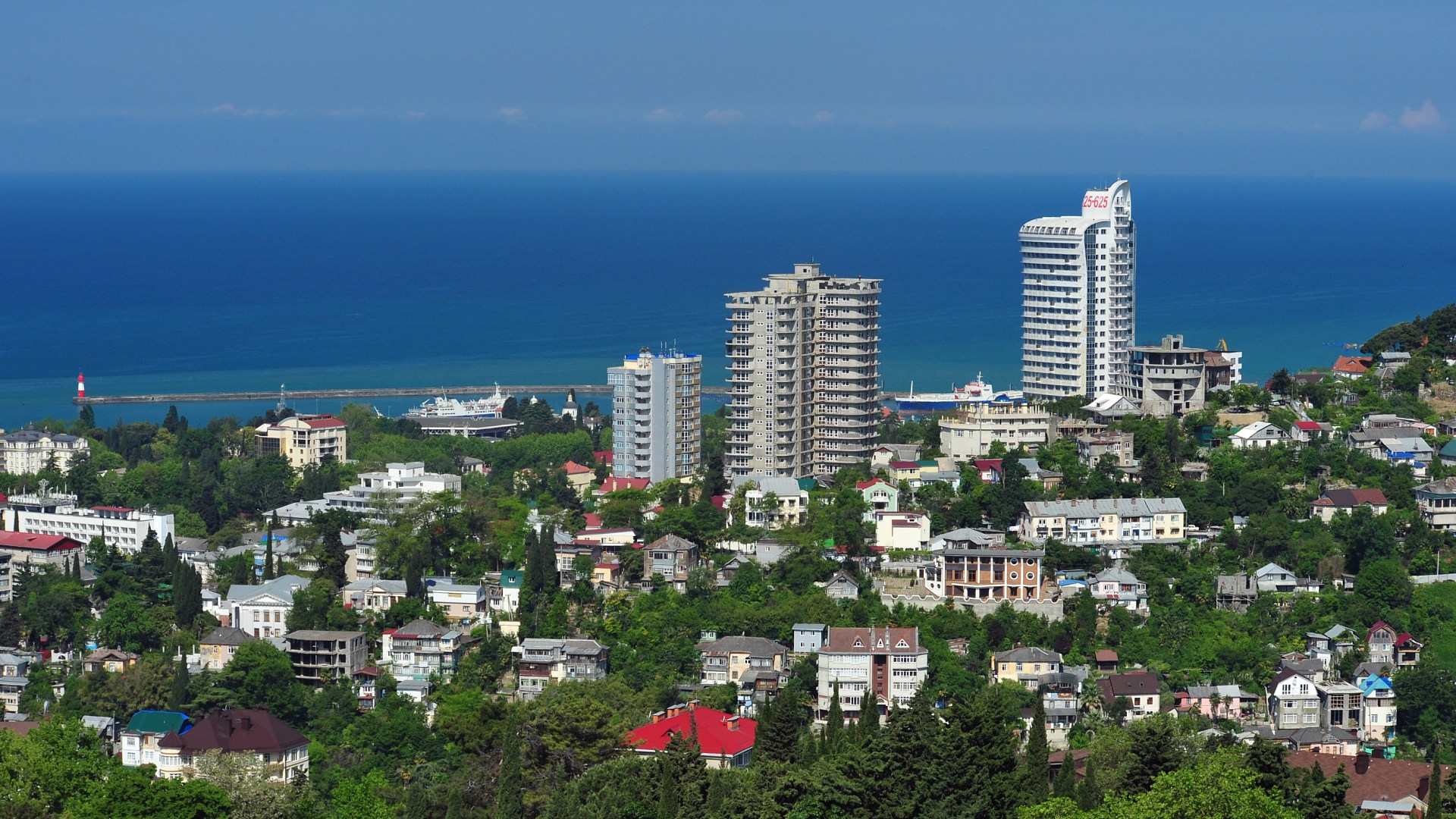
The town Sochi stretches for 145 km along the Black sea coast of the Caucasus in Krasnodar region. The area of the town is 3505 square km. The population is about 400 thousand people. The town consists of four administrative districts: Adler, Khosta, Central, Lazarevskoe. 

The territory of Sochi started being opened up 400-350 thousand years ago in the epoch of early paleolithic, and played an appreciable role in antique and medieval history. A lot of archaeological relics have been discovered and partially examined here: caves, open sites, settlements of prehistorical people, dolmens, ruins of fortresses, temples and burial grounds, burial mounds.

Starting with the second half of the XVI century the Caucasus turned into the arena of Russia's fight with Turkey and Percia. This fight ended up in 1829 with the signing of Andriapol peaceful treatment, ac­cording to which , the Black sea coast from the mouth of the Kuban river till the fort of St. Ni kiolai (to the south of town Poti) became the territory of Russia. During the Caucasian war in the 30-s of the XIX century, the Black sea coast line, consisting of the shore forts for guarding the coast, was formed. The following forts.- of St. Spirit (Adler), Aleksandria (Sochi), Lazarev's fort (Lazarevskoe), Golovinsky (Golovinka) and others, - were built by the Russian troops on the territory of Sochi. The ruins of the forts walls were preserved, and now they are the historical monuments.

On April, 21 1838 the military landed troops laid the fort Aleksandria in honor of the Empress's birthday on the height, at the mouth of the Sochi river. That place became the first Russian settlement, located in the center of modern Sochi.

The town got its present name "Sochi" in 1896 after the name of the river and of the place of the ubykhs tribal nation, who had inhabited this territory till 1864. The examining and exploration of the Caucasus Black sea coast curative factors started after the end of the Caucasian war in 1864. The process of the land division was passing very quickly at that period on the Black sea coast. The government was not able to solve the problem of the industrial development of the region, and it was possible to cope with it on the basis of the private capital only. Russian bourgeoisie, in its turn, felt benefit from this region. New opportunities of investing the capital and of increasing the profit appeared here.

A villa "Vera" was built in N.N.Mamontov's estate in 1872. This building can be considered the first construction of a dacha type on the territory of Big So­ chi . Then some decline in dacha building was observed. The activity of the special commission on exploring the Black sea coast from Novorossiissk to Sukhumi, which had started its work in 1898, was an important page in the history of the development of the resort Sochi. The professors A..I.Voeikov, F.I.Pasternatsky and a mountain engineer A.V.Sergeev were included into the commission. The report of the commission was presented at the I All-Russian congress on climatology, hydrology and balneology in Petersburg in 1898. The reports said, that due to the natural richness of the Black sea coast, the foundation of the balneological and climatic resorts was quite possible. However, considerable sums, the governmental support and the co-action of the people, experienced in this matter, were demanded.


The rich land of the Black sea coast attracted manufacturers and business owners more and more at the end of the XIX- beginning of the XX centuries. According to the Resolution of May, 23 1896 the Black sea district, which had been included into the Kuban region, was separated as an independent Black sea province. It was the smallest of all Russia's provinces (6455 square versts). Simultaneously, the trusteeship of Sochi area was reformed into the district. The borders of Sochi district stretched from the Dederukai river (nowadays- Lazarevsky district) till Sukhumisection (Gagra).

The borders have been expanded at the cost of Sukhumi district since 1901. Since that time Sochi district occupied the territory between the sea and the Main Caucasian Ridge from the Shakhee river in the north till the Bzyb river in the south, including Gagra. By the same resolution (of May, 23 1896) Dakhovsky settlement was re named into settlement Sochi after the name of the tribal community of the ubykhs "so- atshee", who had inhabited this territory till 1864. Since May/I 1898 settlement Sochi was in­ cluded into the list of the settlements with the simplified public governing, i.e. it had the status of an urban type settlement . The administration consisted of a headman, his assistants and of 12 plenipotentiaries, elected by the citizens.

Sochi got the status of a town only in July, 31 1917 after including the suburbs of Vereshchaginskaya, Khludovs- kaya, Katkovo-Leontievskaya dachas, as well as the private people estates-, the Kostarevs's, the Tolokonnikovys's, the Khudekovs's and others, into the urban area of the settlement. There were big private estates of the earl S.D.Sheremetiev, S.I.Kovalevskaya, of the Great prince Mikhail, the tsar's estate "Dagomys", etc.

An architectural aspect with peculiarities and originality, typical only for the seaside resort towns and distinguishing them from other provincial regions, was formed in Sochi at the end of the XlX-the beginning of the XX centuries.

The main principle of a town-constructing approach, when building Sochi, was aimed at the creating a resort as a gar­den-town. Architecture had the features of pavillion-like buildings, typical for the park ensembles, where the main architects' goal was achieving harmony of the architecture with natural landscape. The parks comprised the particular pride of Sochi health-resort town.

The architecture of the buildings was accomplished in strict harmony with the environment and had specific features of its time. The buildings and constructions, erected at that period, have been attracting the attention of the inhabitants and of the guests since then.

Sochi Fine Arts Museum (the former building of the Plenipotentiary Central Elective Committee (CEC) of the USSR in Sochi-Matsesta resort), the Zimny (Winter) theater, Ordzhonikidze sanatorium - are the monuments of architecture and town building of the republican grade.

Natural setting, environment and climatic conditions of Sochi's location are really unique. In fact, a health-resort Sochi in a body is a part of the State Natural National Park, and a part of Sochi has been included in structure of the Caucasian biospheric reserve not without reason.

90% of territory of Sochi are mountains and foothills of the Western Caucasus covered by boundless deciduous forests. Because of a soft climate, plants from all parts of globe are collected here.

The altitude of highest mountains is more than 3000 m above sea level. Only here you've got an opportunity for simultaneous sun-bathing, sea baths taking, and for mountain skiing.

A land along-shore the Big Sochi, from settlement Magri in northwest, up to the river Psou on border with Abkhazia squeezes through gaps between the Black Sea and piedmonts of the Western Caucasus.

Warm coastal sea cur­ rents, glen winds and breezes render softening influence on a climate, creating surplus of a moisture under high summer temperature.

The network of mountain ridges protects coast from severe dry continental winds and creates a unique subtropical micro-climate in this territory.


Recommended hotels in Sochi, Russia :
Nairi Hotel

Planning a trip to Sochi, Russia? Visit Hotels-Seeker.com and Booking.com to get the best accommodation prices in real time, straight from the 100 best reservation websites in the world!

Monday, February 17, 2014

England for the Novice Adventurer


England, which is also known as the land where sun never sets is an awesome place for the people to spend their vacation. Different world famous attractions can be seen in England for the people to enjoy. They can help an individual to get an unforgettable holiday. London is the capital city of England and most of the tourist attractions of England are centered on London. The Tower of London can be defined as one such attraction. The Tower of London was built in the 11th century and has played a very prominent role in English history. It is the original royal fortress and is located on the north bank of River Thames. It is one of London's best sites depicting the history and glory of England. Throughout the centuries, the tower has been a palace, prison, place of torture and place for crown jewels. Millions of people visit the tower every year and is one of world's heritage sites in the UNESCO list since 1988.

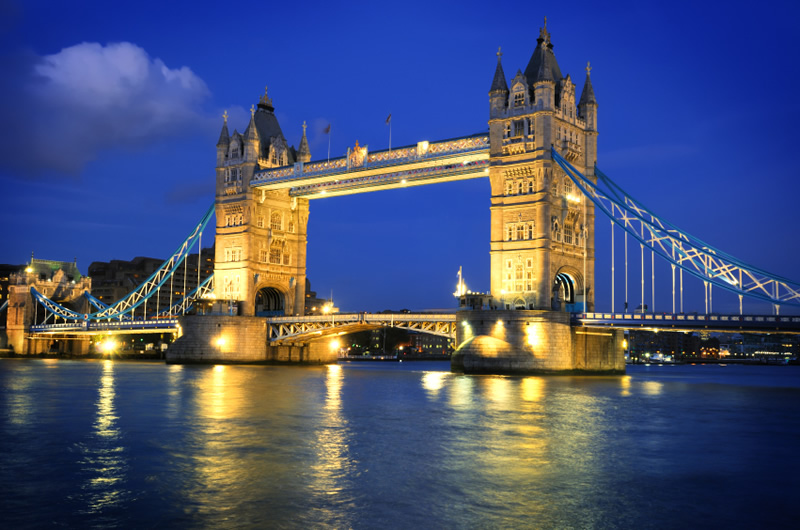
Tower Bridge is a bascule and suspension bridge over The Thames and was opened in 1894. It is an iconic part of the London skyline and the glinting blue upper walkways offer special views of building that line the river, the city center to the west and the Docklands to the east. The Tower Bridge Exhibition attracts people to the bridge, where the construction is explained and visitors are allowed to look into Victorian engine rooms and know about the power that raised the bascules of the bridge. Trafalgar Square is London's famous public square and tourist attraction in central London that was created to commemorate the Battle of Trafalgar. The National Gallery in the north, St Martin-in-the-Fields Church in the east, the Strand to the south of the Church and many prominent statues make the square a unique attraction in London.

London Dungeon is one of London's famous attractions recreating glory and macabre historical events in a gallows humor style. With live actors, special effects and rides, this site appeals younger audience largely. It was opened in 1974 and is operated by Merlin Entertainments. It's highly thrilling to face the worst nightmares, take rides like extremis and traitor and have several unique experiences. Shakespeare's Globe is located on the south bank of the River Thames. It's a commemoration to the famous English poet and dramatist William Shakespeare. The current theatre is the replica of the original Theatre built in the 16th century, which was burnt to ground in the 17th century. It is a commemoration to William Shakespeare one of world's best English poets and dramatists.

England is a crowded country, so the tourists who are planning to visit the country are advised to book hotels before they land. Hotels-seeker.com will help you to book the hotels in a convenient way. All you have to do is to visit Hotels-seeker and search for the hotels in your destination town. Then you will be directed to the search results page, which will contain a list of all the available hotels in that particular city. All the results are taken on a real time basis from leading hotel booking websites like Travelocity and Venere. They have a good collection of hotels in their databases and they include most of the hotels, motels, inns and hostels in England. Moreover, you can access the video on context feature and watch video documentaries about England while searching for a hotel. There is something for everyone who is planning to visit another country in Hotels-Seeker.com, so thousands of people visit there to make their journey a memorable one.

The best hotel accommodations in the popular cities in England :
Birmingham

Planning a trip to England? Visit Hotels-Seeker.com and Booking.com to get the best accommodation prices in real time, straight from the 100 best reservation websites in the world!

Saturday, February 8, 2014

Get the Best Accommodation Deals in Thailand with Hotels-Seeker.com


Thailand is renown throughout the world for being a popular travel destination and a backpacker's paradise, but the pure white beaches, the crystal blue sea, the beautiful historical and cultural locations and the busy inner cities can lend themselves to the hearts of any willing tourist. Whether you're looking for thrilling sites, relaxing tropical vistas or the sprawling metropolis of Bangkok, there is something in Thailand for everyone. Thailand is blessed with a tropical climate, leaving it oscillating between cool temperatures and sweltering heat, aside from a brief rainy season around September time. Beach goers will want to visit around March to June time, whilst backpackers and those visiting temples wanting to avoid the worst of the heat by heading out between November and February.

Most people spend a few days in the Thai capital, Bangkok but many find the pollution, traffic congestion and chaotic street life extremely wearing. There's plenty to take you off the street, however, including the glittering Grand Palace compound and its beautiful gigantic Reclining Buddha; the comprehensively stocked National Museum; the massive Chatuchak weekend market; with over eight thousand different nightlife that suns the full range from cutting-edge clubs to depressing strip joints. Thailand's beaches are among the world's best. You'll find the most developed and expensive resorts and some of the finest sands, on the islands of Ko Samui and Phuket, while backpakers tend to head for the more budget oriented Ko Pha Ngan, Ko Tao, Ko Lanta and Ko Mook. Krabi's Railay beaches are nothing short of stunning, Ko Samet makes and easy and economical break from Bangkok and Ko Chang is handy for travelers heading in and out of Cambodia.

You can even visit the ruined former capitals of Sukhothai and Ayutthaya during your stay in Thailand. Dating from the thirteen century, Sukhothai is a beautiful example og thoughtful city planning enlivened by lakes and elegant statues of the Buddha. The 300-year-old temples and palaces of Ayutthaya display a refined mix of Hindu and Buddhist sculpture and are fun to explore by bicycle. Both sets of ruins are now conserved as historical parks. There are plenty of sobering World War II sights in the town, as well as reasonable range of trekking, rafting and cycle options that make the most or the fine river scenery, plus some appealing rafthouse accommodation too. Since Thailand is a major tourist attraction in the world, you can find a wide range of services as well. The Thai massages are one such popular service offered to the tourists by native people. If you can find cheap accommodation facilities in Thailand, you can experience all these things with less hassle. If you are looking for accommodation facilities in Thailand, Hotels-Seeker.com is the website that you need to visit. With the help of Hotels-Seeker, you can find a perfect hotel in Thailand within few minutes.

Plenty of reasons are available for the tourists to visit this website than going for hotel booking websites like Octapustravel.com, Otel.com and Agoda.com. They are made only for hotel booking purposes, but Hotels-seeker is made specifically for hotel comparison. The available features will help you to compare the available hotels and find the perfect one for you. Looking for hotels has never been so easy like this. When you find the perfect hotel, you can go ahead and find the contact details to book the hotel. There is an interesting video documentary service on the website which allows you to see videos of attractions around the hotel you select. Therefore visit Hotels-Seeker right now and spend an unforgettable vacation in Thailand.

The best hotel accommodations in the popular cities in Thailand :

Planning a trip to Thailand? Visit Hotels-Seeker.com and get the best accommodation prices in real time, straight from the 100 best reservation websites in the world!

Sunday, October 13, 2013

The Best Attractions in Athens, Greece


Athens is the capital and largest city of Greece. Athens dominates the Attica region and is one of the world's oldest cities, with its recorded history spanning around 3,400 years. It features some of the greatest tourist attractions in the world, including ancient temples and fabulous museums. In this article I will present some of them.

Cape Sounion and the Temple of Poseidon

A great afternoon trip from Athens, this is one of those spots that is as much a favorite with the locals as it is with the tourists. It's a favorite sunset-viewing spot for everyone, and will give you a classically Greek moment against the ruined monument along with a terrific sea view. While it is possible to visit Sounion by public bus from Athens, most visitors prefer to drive or to take an organized tour. You can book one directly ahead of your trip, through your hotel or by visiting any travel agency in Athens.

Piraeus

Can't get away to the Greek islands? Or already missing the one you just left? Slip away to Piraeus, easily reachable by the Metro, and have dinner at one of the pricy but charming seaside taverns of Microlimano. Piraeus, the port city of Athens, is not quite a Greek island, but it will do. Allow yourself some extra time and stop by the excellent Piraeus Archaeological Museum or the equally-fascinating Nautical Museum first. You can also take an Open-Topped Bus Tour (find prices) between both Athens and Piraeus, making it an easy and interesting way to get back and forth between the two cities.

The Agora

This is one attraction that gets skipped, partly because it is readily confused with the Roman Agora and while you'd be falling over yourself to visit a Roman agora in Italy, well, this is Greece. (For the same reason, the very nice Egyptian antiquities collection at the National Archaeological Museum gets overlooked, too - except by Greeks.) But this spot offers an easy hour's wandering, with the almost-perfect temple of Hephaestus, a rebuilt colonnade housing the museum, and many minor monuments. A multiple-site combo ticket makes it a particularly good bargain to combine a visit here with the Acropolis and other nearby sites.

Lycabettus Hill

Want to rise above it all, especially on a hot day when the thought of the stony outcrop of the Acropolis seems too warm and bright? Take the easy way up to the wooded top of Lycabettus Hill by using the tubular funicular rail car and escape the heat and, if you're lucky, some of the tourist crowds.

Tomb of the Unknown Soldier

The war memorial known as the Tomb of the Unknown Soldier is guarded by the city's famous statuesque evzones, the presidential guards whose uniform of short kilts and pom-pom shoes is based on the attire worn by the klephts (the mountain fighters of the War of Independence). The changing of the guard takes place every hour, while every Sunday at 11:00 the evzones perform an extended changing of the guard ceremony in full ceremonial dress, accompanied by a military band.


Recommended hotels in Athens, Greece by Booking.com

National Art Gallery

Greece’s premiere art gallery showcases its permanent collection of modern Greek art and hosts major international exhibitions. Exploring the country’s art movements, the exhibits include post-Byzantine art and works from the Eptanesian School of secular painters; portraits and historical scenes from the War of Independence and the early years of the Greek state; and leading 20th-century painters. Prize exhibits include three masterpieces by El Greco.

Temple of Olympian Zeus

The colossal Temple of Olympian Zeus (or Olympeion) is the largest in Greece and took more than 700 years to build. Fifteen of the original 104 massive (17m-high) Corinthian columns survive, along with the one that toppled over in a gale in 1852. Peisistratos began building the temple in the 6th century BC on the western bank of the Ilissos River, at the site of a smaller temple (590–560 BC) dedicated to the cult of Olympian Zeus (its foundations can be seen on the site), but construction stalled due to lack of funds. A succession of leaders tried to finish the job, making adjustments along the way, which explains inconsistencies in the temple. Hadrian finally finished the task in AD 131. The temple housed a giant gold and ivory statue of Zeus and one of Hadrian.

Panathenaic Stadium

The first modern Olympic Games, in 1896, were held in the imposing Panathenaic (or Panathenian) marble stadium, on the site of the original 4th-century BC stadium built for Panathenaic athletic contests. The Romans held gladiatorial contests where thousands of wild animals were slaughtered and it was later rebuilt by Herodes Atticus for the Panathenaic Festival in AD 144. The stadium was completely restored for the 1896 Olympics and for the 2004 Games. The stadium, which is known as the Kalimarmaron (meaning ‘beautiful marble’), made a stunning backdrop to the archery competition and the marathon finish. Public access is limited, but it is a site to behold.

Planning a trip to Athens? Visit Hotels-Seeker.com and Booking.com to get the best accommodation prices in real time, straight from the 100 best reservation websites in the world!